Why Great Lighting Is the Unsung Hero of Luxury Homes
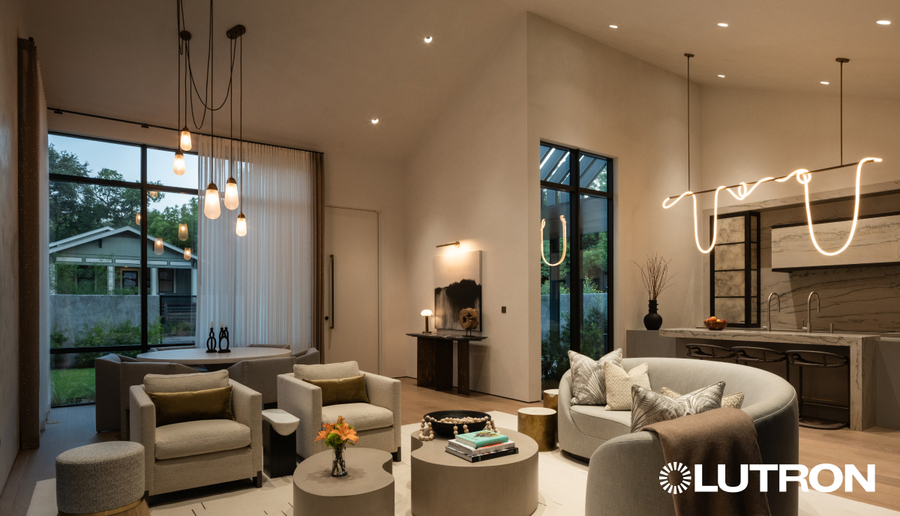
Intentional Lighting Design Shapes the Way Your Home Feels, Functions, and Flows
Walk into most new homes after dark, and you'll notice the same thing: overly bright overhead lighting that makes every room feel like a waiting area. It doesn't matter how much you spent on countertops or custom cabinetry; flat, generic lighting drains the life out of even the most carefully designed spaces.
Lighting is an oft-misunderstood element of a home’s design. It certainly isn’t just about brightness. It's about layers, timing, and understanding how light shapes the feel of a room. The difference between a luxury home and an ordinary one often comes down to whether someone planned the lighting with intention or just let the electrician drop in whatever fixtures fit the budget. When done right, lighting becomes the invisible thread that ties everything together, making spaces feel natural, comfortable, and inviting to live in.
The Problem with "Just Cans"
Recessed downlights have their place, but they're not a complete lighting strategy. They provide general illumination, but not much more. What you end up with are rooms that feel one-dimensional. Shadows pool in the wrong spots. Textures disappear. That beautiful stone backsplash or wood-beam ceiling loses all its depth under uniform overhead lighting.
There's also no flexibility. The same bright lighting you need for cooking dinner becomes overwhelming when you're trying to wind down later. Sure, you can dim them, but often that doesn’t give you more of an effect than a darker room, so your home never quite matches the moment.
The Three Essential Layers of Light
Professional lighting design works in layers, not just individual fixtures. Each layer has a specific job.
Ambient lighting provides the base level of illumination—recessed downlights, cove lighting, or linear fixtures that fill the space without drawing attention to themselves. This is your foundation, not your finished product.
Task lighting supports specific activities, like under-cabinet lights in the kitchen or a reading light next to your favorite chair. In bathrooms, vanity lighting that lets you see what you're doing is critical. These fixtures stay focused on function without overpowering the room.
Accent lighting adds depth and drama. It's what highlights the texture in a stone wall, draws your eye to artwork, or grazes across architectural details. Typically three times as bright as ambient light, accent fixtures create visual interest and add dimension to spaces.
The difference is obvious once you see it. A room with all three layers working together feels balanced and intentional. A room with just overhead cans feels like exactly what it is—unfinished.
Human-Centric Lighting
Modern lighting design also considers how light affects your body throughout the day. Cooler, brighter light during morning and afternoon hours supports focus and energy. Warmer light in the evening helps you transition toward rest. Tunable white light technology allows fixtures to shift color temperature automatically as the day progresses, moving from 4000K down to 2700K without you touching a switch.
The result is a home that feels more in sync with how you actually live. Better sleep quality. Less eye strain in your home office. Spaces that naturally encourage the right mood at the right time. It's a level of sophistication that requires both the right fixtures and intelligent control to manage them. And you get the benefits of sophisticated ambiance along with improved mood, focus, and sleep.
Smart Control Makes It Work
Even perfect fixture placement needs intuitive control. Modern lighting systems from companies like Lutron let you manage everything from keypads, apps, or voice commands. Preset scenes handle the complexity, so you’re not flipping switches and sliding dimmers. One touch shifts your entire home from "daytime" to "entertaining" to "bedtime" without fuss. Lighting also works in tandem with motorized shades and climate control to create a comfortable atmosphere throughout the day, without you having to think about it.
Great lighting design doesn't announce itself. You simply notice how right everything feels—how comfortable your kitchen is in the morning, how your living room transitions naturally into the evening, how your home seems to anticipate what you need. It's the result of thoughtful planning that treats lighting as the foundational system it actually is. Isn’t this the lighting your beautiful home deserves? Contact us to start the conversation!